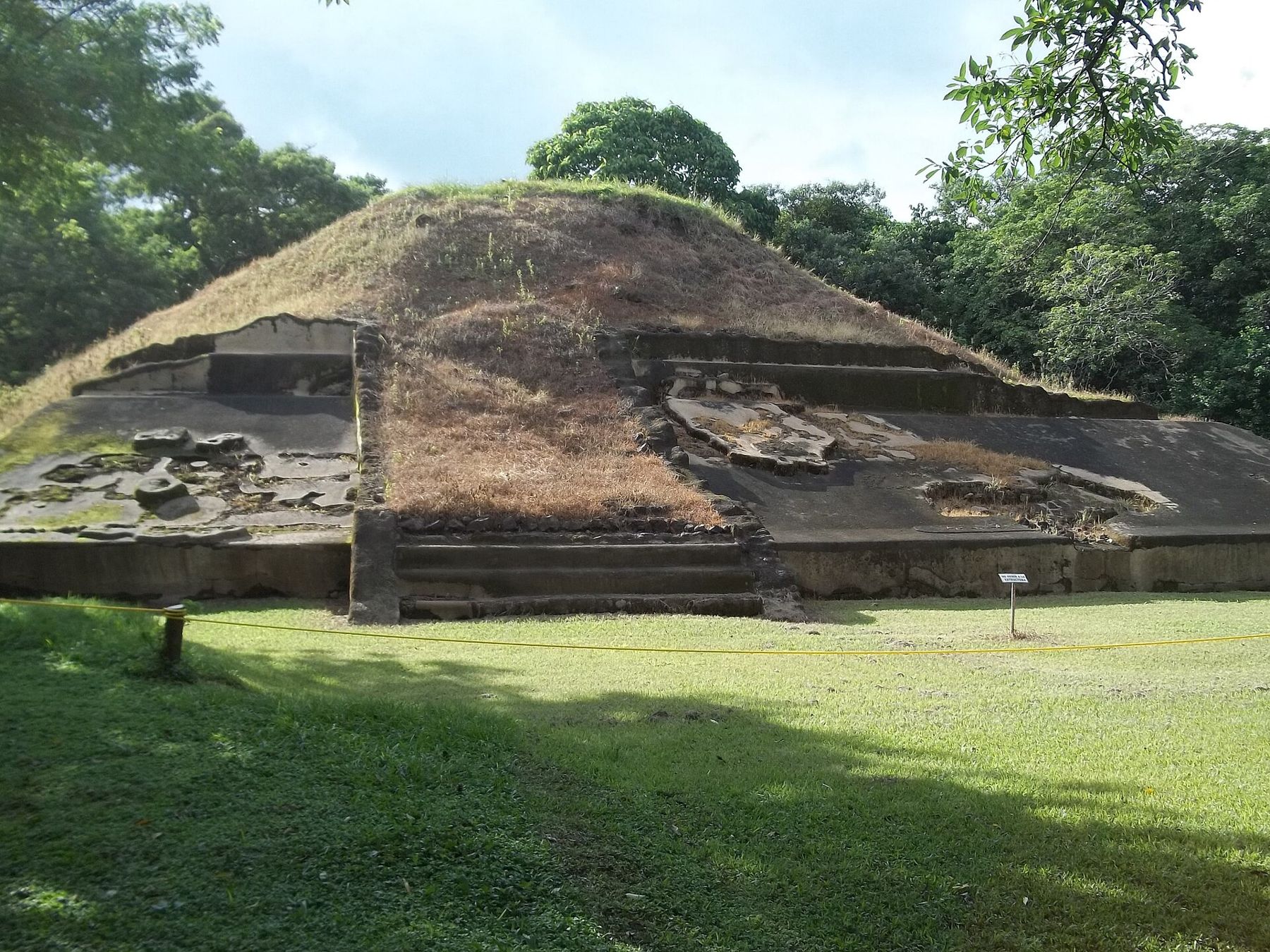
El Salvador's Maya sites are smaller than the great cities of Guatemala and Honduras, but they are easy to reach and rarely crowded. The most visited of them is Tazumal, on the edge of the town of Chalchuapa, a short trip west of Santa Ana. Its main structure, a stepped pyramid of grey terraces rising above a lawn, is one of the best known images of the country's ancient past. A few streets away, the Casa Blanca archaeological park holds older mounds, a small museum and a workshop where indigo dye is made the old way.
Together they make an easy half day from Santa Ana or a good stop on the way to the Ruta de las Flores. Neither needs special fitness, and both are at their most pleasant in the morning, before the lowland heat builds.
A long history in one valley
Chalchuapa sits in a fertile valley close to the Guatemalan border, with springs, a small lake and good farmland, and people lived here for a very long time. Archaeologists treat the whole area as one large zone with several groups of ruins, some dating back well before the Common Era and others to the centuries just before the Spanish conquest. Tazumal and Casa Blanca are the two parts that are laid out as parks for visitors; other mounds lie under fields, gardens and streets around the town.
Over those centuries Chalchuapa was part of the wider Maya world of the southern highlands, trading with its neighbours and, at different times, showing influence from far away. Objects found here include pottery, jade, obsidian and sculpture that point to links with the Maya lowlands, with the highlands of Guatemala and with central Mexico. The region was also hit by volcanic disasters, above all the great eruption of the Ilopango caldera, east of the capital, which spread ash across much of what is now El Salvador around the fifth or sixth century and emptied parts of the country for a time.
Tazumal
The heart of Tazumal is a large stepped structure, built and rebuilt over several centuries, with platforms, stairways and terraces rising more than twenty metres above the plaza. In front of it lie lower platforms and a ball court, the narrow court where the Mesoamerican ball game was played. The main pyramid is not climbed; you walk around it on paths and see it from several sides.
What you see today is partly the work of restorers. In the middle of the twentieth century much of the main structure was rebuilt and covered in cement, which gives it its sharp grey lines but has long been debated by archaeologists, as it changed the appearance of the building and caused problems with water and drainage over time. Later work has tried to stabilise and repair the structure. Knowing this makes a visit more interesting, not less: you are looking at an ancient building and at the history of how people have tried to look after it.
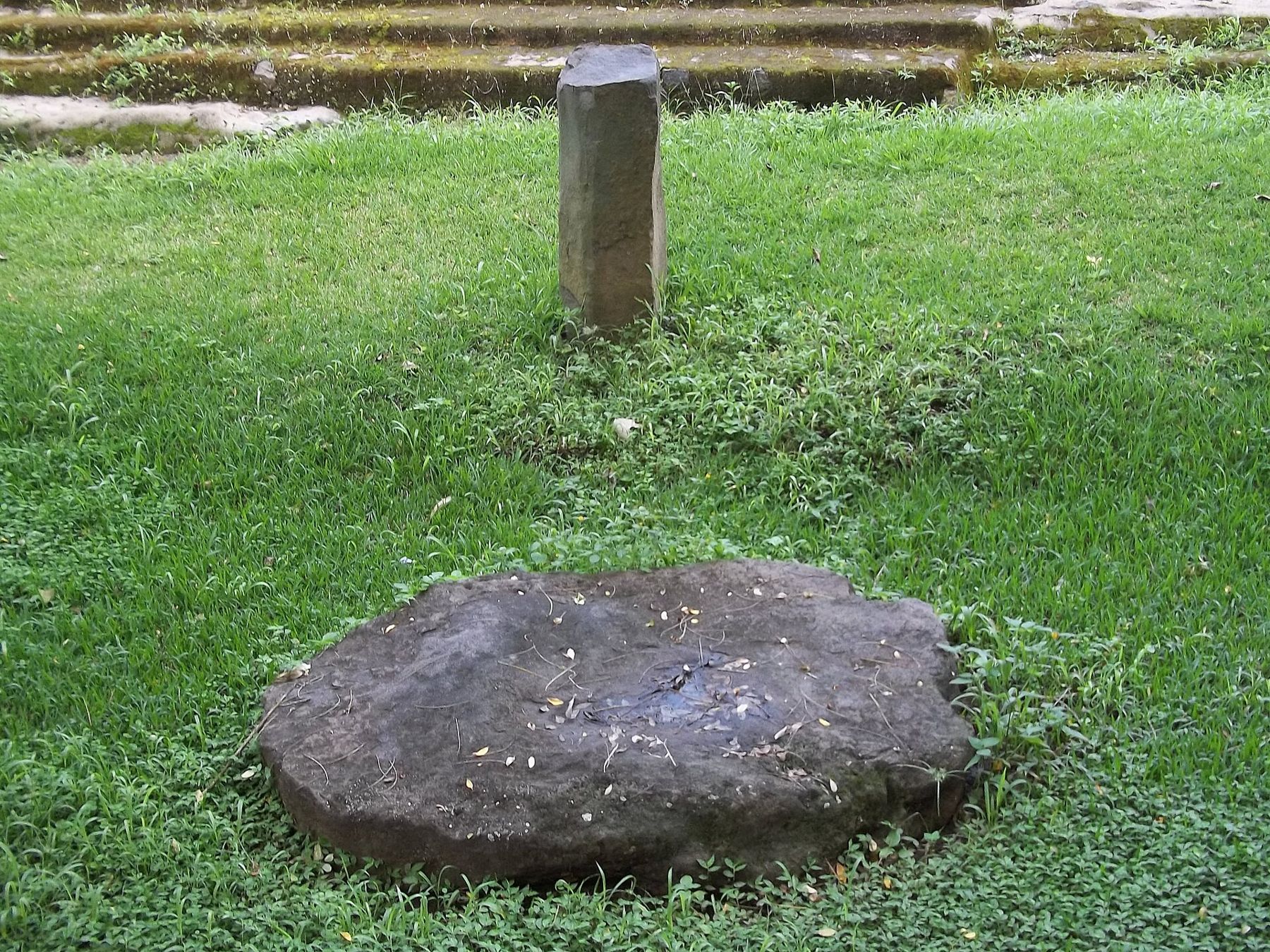
The site has a small museum with finds from Tazumal and the wider Chalchuapa area, including pottery and sculpture. Among the most famous pieces from the site is a large carved stone stela with a standing figure, and a reclining sculpture of the type known as a chac mool, a form associated with central Mexico. Whether particular pieces are on show here or in the national museum in San Salvador can change, so check before you go if you hope to see something specific.
Casa Blanca and its indigo
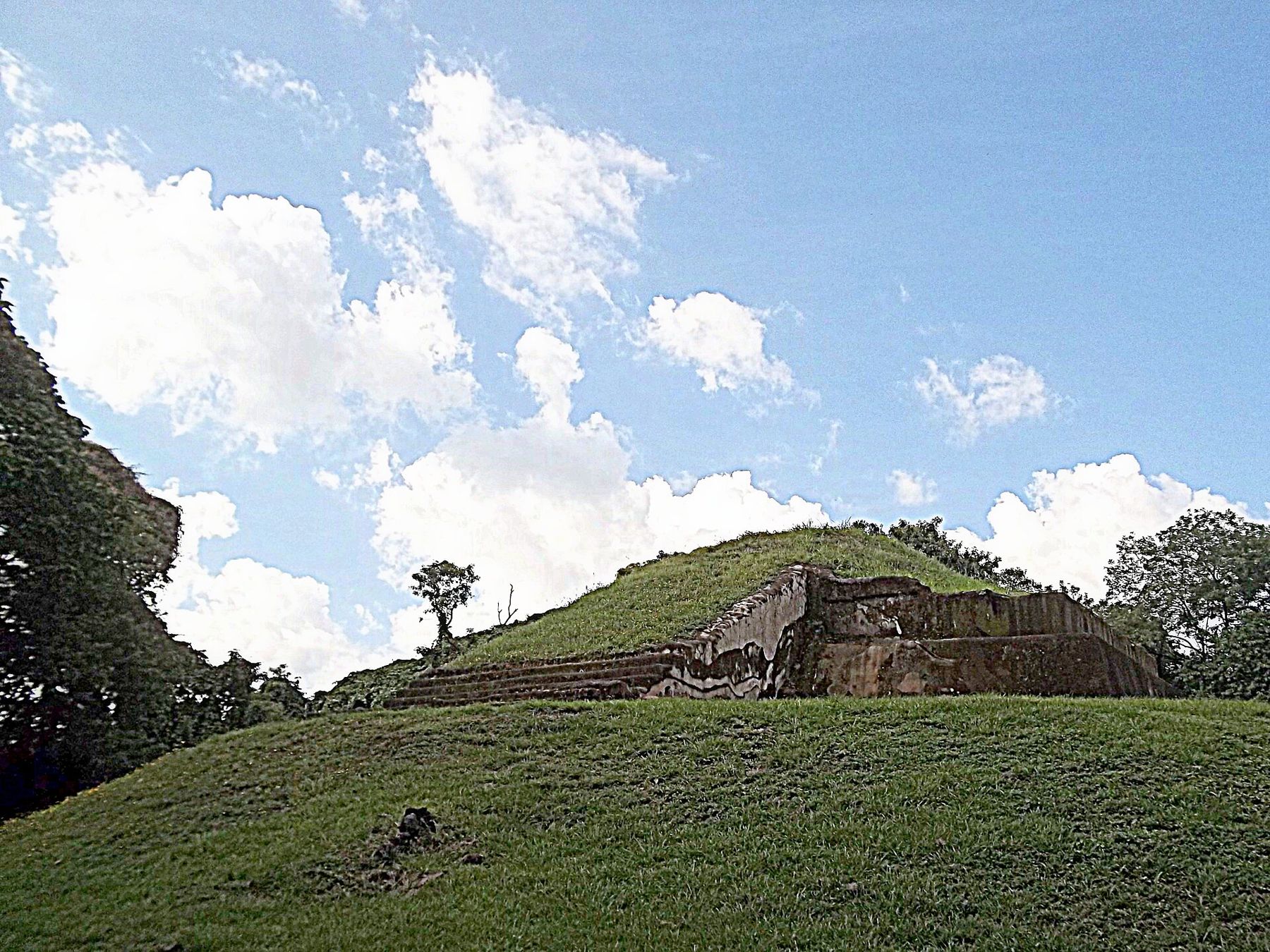
The Casa Blanca archaeological park lies close by and is quieter than Tazumal. Its ruins are mostly low pyramids and platforms, some left as grassy mounds and some partly cleared to show the stepped walls beneath, under big shade trees. Excavations here have shown that the site was important early in Chalchuapa's history, centuries before the main building phases at Tazumal. A section of excavated wall is protected so you can see how the structures were built up layer by layer.
Casa Blanca also has a workshop devoted to indigo, the deep blue dye that was El Salvador's main export before coffee. Indigo, or añil, was grown and processed across the country in the colonial period and the early years of independence, and fortunes were made from it before the coffee boom took over. At the workshop you can learn how the dye is extracted from the plant and see cloth being dyed, and some visits include the chance to try it yourself. What is offered on a given day varies, so ask at the entrance.
The story of indigo giving way to coffee is the story of the whole west in miniature. The guide to how coffee built Santa Ana picks up where the indigo era ends.
The story of indigo giving way to coffee is the story of the whole west in miniature.
Chalchuapa, the town
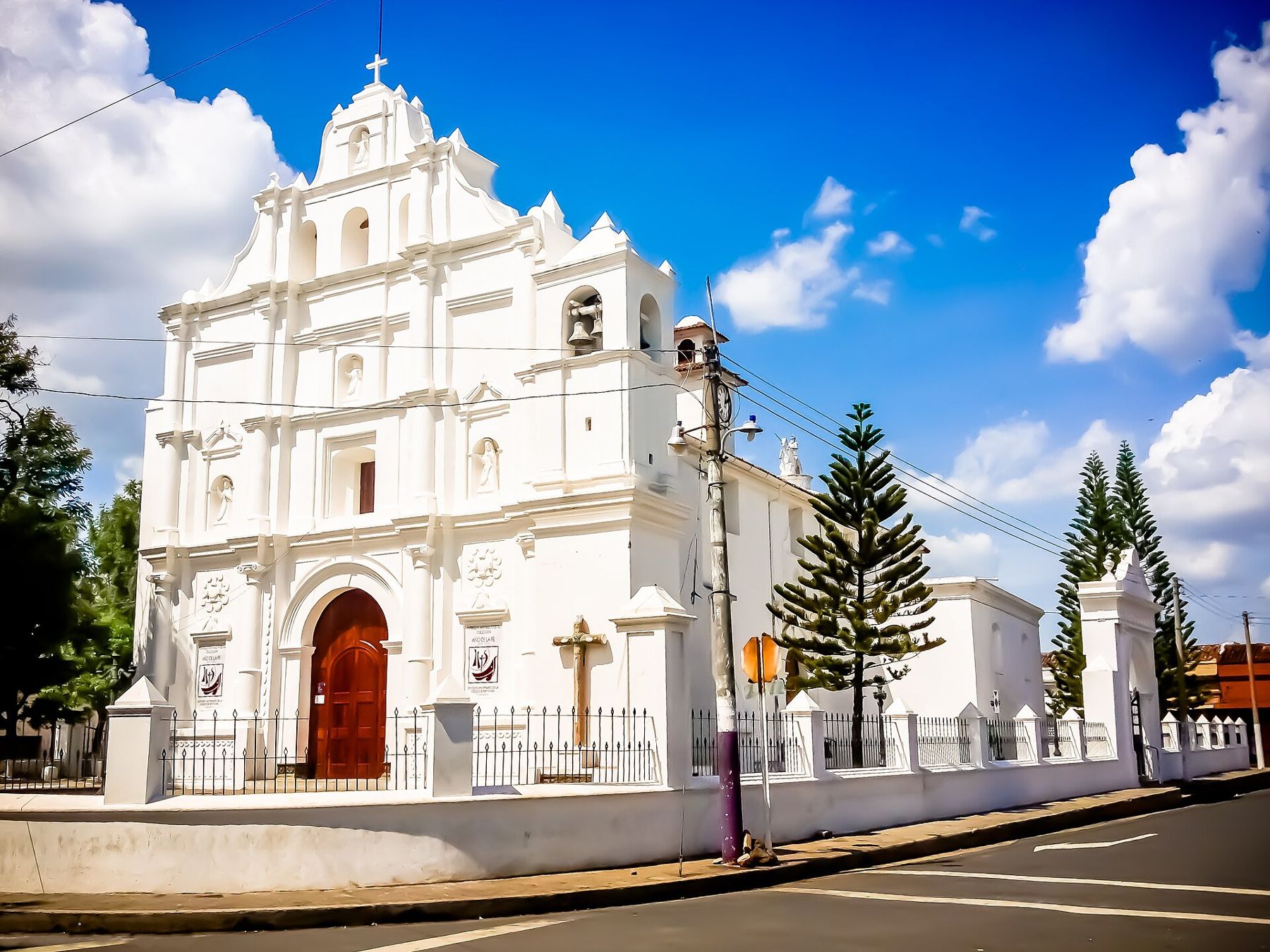
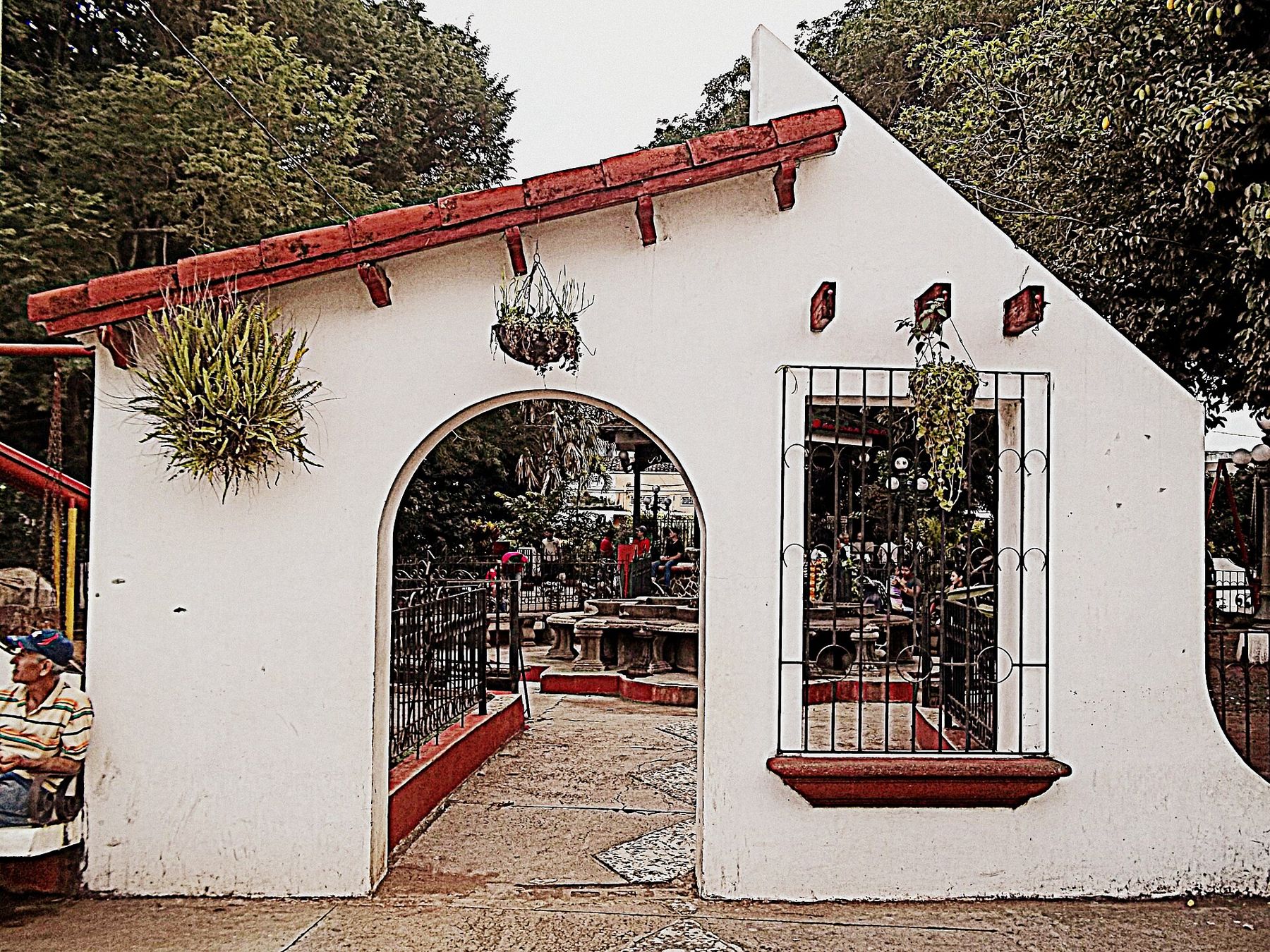
Chalchuapa is a busy market town rather than a tourist centre, and that is part of its appeal. Its church of Santiago Apóstol is a colonial building with a white facade of columns, niches and a stepped gable, and it is one of the older churches in the west. It stands on a corner a short walk from the town's central park, a shady square with benches and a few gateway arches where people sit out of the sun.
The town also has a place in nineteenth-century history. In 1885 the Guatemalan president Justo Rufino Barrios, who was trying to unite Central America by force, was killed in fighting near Chalchuapa, and the battle put an end to his campaign. It is a reminder of how close the town is to the border and how often this corner of the country has been a crossroads.
Planning a visit
Tazumal and Casa Blanca are run as public archaeological parks with an entrance fee for each; fees and opening days are set by the authorities and change from time to time, so check before you go. Both sites are small, and you can see them in a couple of hours, though the museums reward an unhurried look.
- Go in the morning: the lawns have little shade and the plain is hot by midday.
- Bring water, a hat and sunscreen.
- Carry small US dollar notes for entry and for the indigo workshop.
- Wear comfortable shoes; paths are mostly flat grass and gravel.
Buses run between Santa Ana and Chalchuapa, and some continue toward Ahuachapán; route numbers and timetables change, so check them before you travel, and see getting around the west. With a car, Chalchuapa combines easily with Santa Ana in the morning or with Concepción de Ataco and the flower towns in the afternoon. For a fuller picture of everyday life in the Maya world, pair Tazumal with Joya de Cerén, the village preserved under volcanic ash further east.
Conditions in El Salvador have changed a lot in recent years; check current official advice before you travel. The dry season, roughly November to April, has the clearest skies, while the rainy months bring green lawns and afternoon storms.
Coffee note
Chalchuapa lies on the warm plain below the coffee hills. The road west toward Ahuachapán and Ataco climbs out of cane and pasture into the shaded fincas.