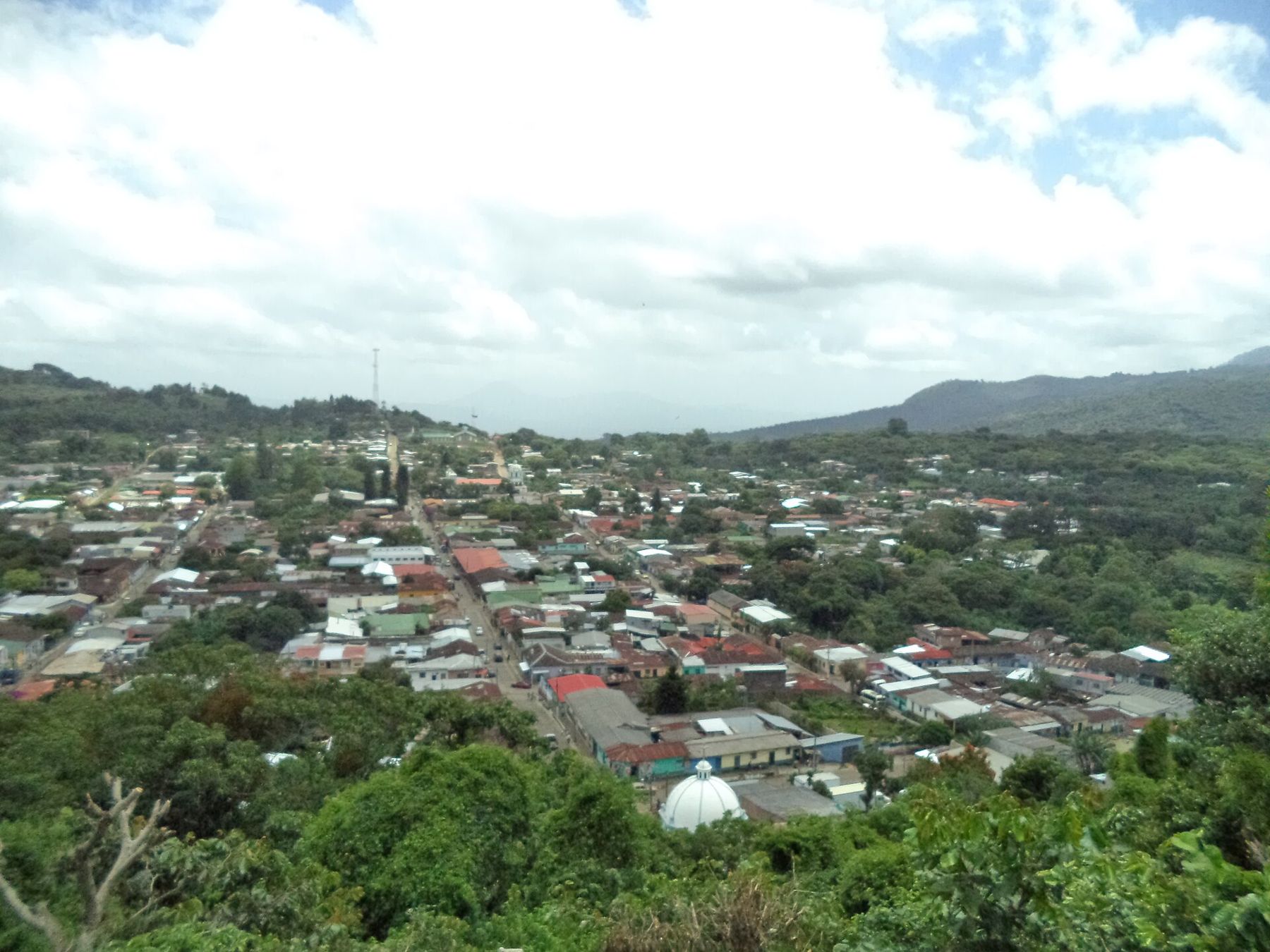
Concepción de Ataco, usually just called Ataco, is the westernmost of the towns on the Ruta de las Flores, the road that winds through the coffee hills of the Apaneca range between Sonsonate and Ahuachapán. It is a small town of cobbled streets and low colonial-style houses, and it has become known across El Salvador for its murals. Walls all over the centre are painted with scenes of village life, flowers, animals and bright patterns, and a slow walk through the streets feels like moving through an open-air gallery.
The town sits at about 1,200 metres, high enough that mornings and evenings are cool, and in the dry season the air is clear and fresh. Coffee farms cover the hills around it, and the views from the edge of town run across green slopes toward the volcanoes.
Walls that tell stories
The murals are Ataco's signature. They began appearing on walls in the town centre in the early years of this century and have since spread over many streets, painted by local artists and others who came to work here. Some are huge, covering the whole side of a building; others frame a single doorway or window.
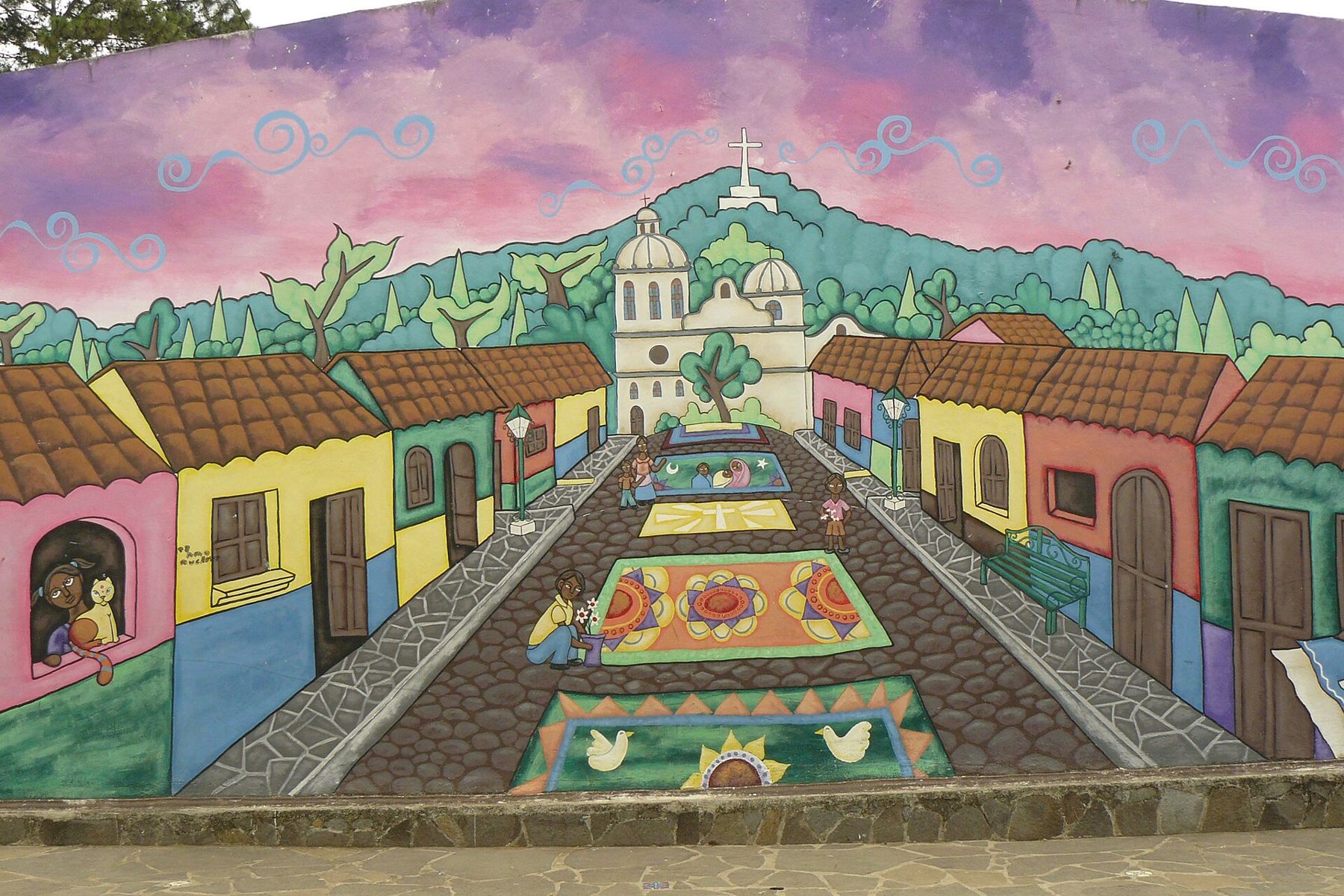
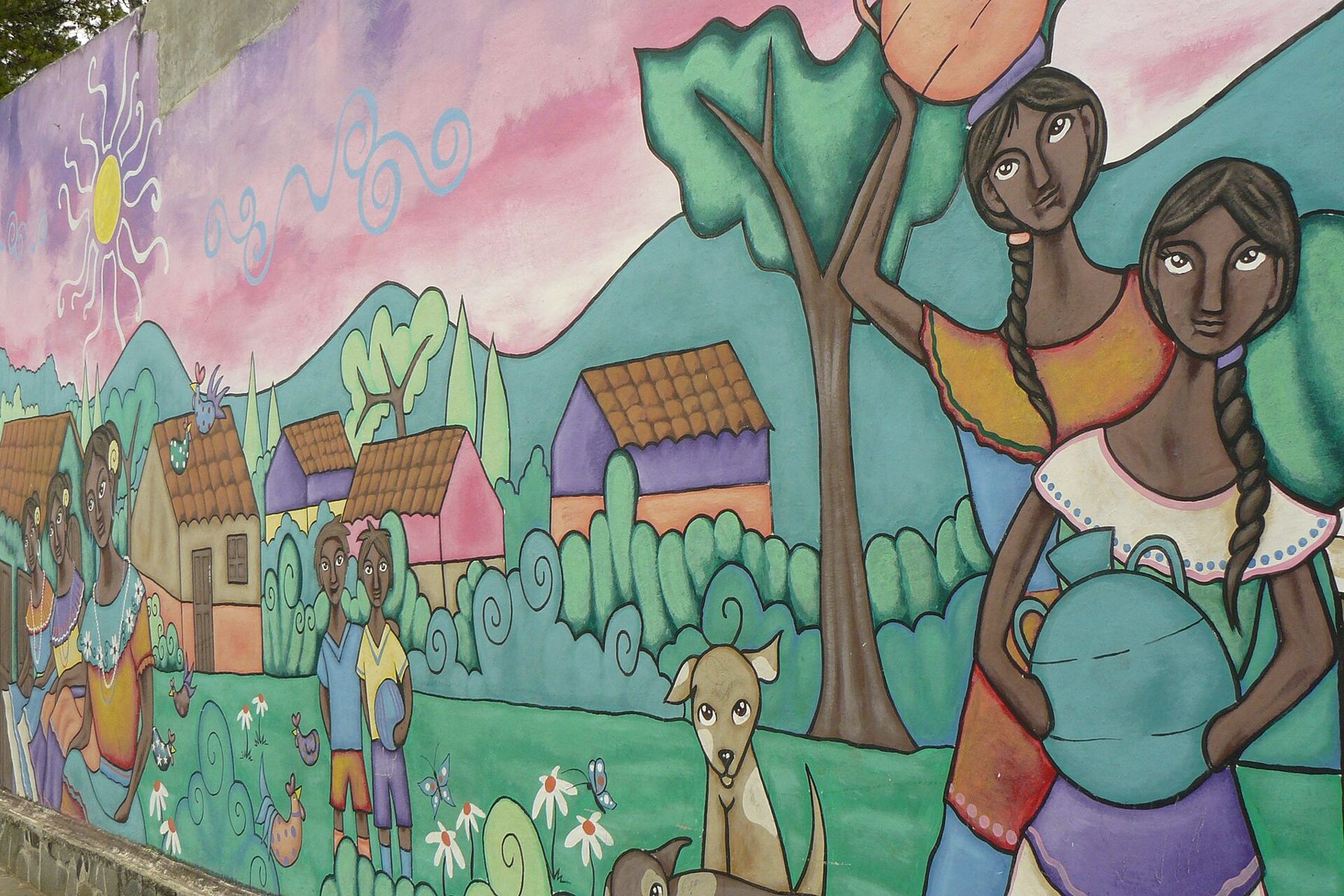
Many of the paintings show the town itself: cobbled streets lined with pink, yellow and green houses, the white church with its domes, the hill with the cross above. One recurring theme is the alfombras, the carpets of coloured sawdust and flowers that people lay on the streets for processions during Holy Week. Other murals show women carrying water jars, children playing, dogs, birds and butterflies, all in bold outlines and saturated colours.
There is no set route. The best way to see the murals is simply to wander, turning down side streets and looking back over your shoulder, because some of the best walls are only visible from one direction. Mornings bring the softest light; by afternoon the strong sun can wash out the colours.
Cobbles and the church
Beneath the paint, Ataco is an old town. Its streets are laid with stone cobbles, uneven enough that good shoes help, and its houses have thick walls, tiled roofs and tall wooden doors. The town's church, dedicated to the Immaculate Conception, stands at the heart of the centre near the main square. It is a working parish, so visit quietly and dress modestly.
The town has Pipil roots like most of the settlements in these hills, and its name is usually traced to Nahuat. Its full name joins that older name with the Spanish dedication of its church, a pattern you see across western El Salvador.
Holy Week, the week before Easter, is when the alfombras painted on the walls appear on the streets for real. Families and neighbours work through the night laying patterns of dyed sawdust, flowers and seeds along the route of the processions, which then walk over them. If you are in the region at that time, Ataco is one of several towns where you can see the tradition, though it also brings crowds; plan ahead and check dates before you go.
Looms and textiles
Ataco has a tradition of textile weaving, and in some workshops around town you can see wooden looms in use, producing cloth in strong colours and patterns. The work is slow and skilled, with weavers working the treadles and passing the shuttle by hand. Some workshops welcome visitors to watch, and woven pieces are sold in the town. Arrangements and opening times vary, so ask locally and check before you go.
The colours of the textiles echo the colours on the walls, and together they give the town its bright, crafted feel. Other crafts, from carved wood to painted pieces, are sold in small shops along the streets.

The mirador and the hilltop cross
Above the town stands a hill topped with a large cross, visible from many streets and painted into several murals. A path climbs to it from the edge of town, and from the top, the mirador, you look down over the grid of streets, the white dome of a church below and the coffee-covered hills rolling away toward the volcanoes. On clear days you can see a long way west toward Guatemala.
The climb is short but steep in places, and it is best done in the morning or late afternoon, when it is cooler. Go with others rather than alone, and ask locally about the current state of the path; conditions in El Salvador have changed a great deal in recent years, and it is wise to check current official advice before walking outside town centres.
Walls all over the centre are painted with scenes of village life, flowers, animals and bright patterns, and a slow walk through the streets feels like moving through an open-air gallery.
Coffee hills and the Ruta de las Flores
Ataco is surrounded by coffee country. The fincas on the slopes grow coffee under shade trees, and the harvest in the dry months fills the hills with activity. Some farms in the area offer tours that show how coffee is grown and processed; options and prices change, so check before you go. The guide to how coffee built Santa Ana tells the wider story of coffee in the west.
The Ruta de las Flores takes its name from the flowers that line the road between the towns, many of them blooming from around October into the early months of the year. Ataco makes a good end or start point for the route. To the east lie Apaneca, the highest town on the road, then Juayúa with its weekend food fair, and then Salcoatitán and Nahuizalco, known for crafts and Nahua heritage.
Getting there and when to go
Ataco lies on the road between Ahuachapán and Sonsonate. Buses run along the Ruta de las Flores and link the towns with Ahuachapán, Sonsonate and Santa Ana, though route numbers and timetables change, so check them before you travel. A car lets you stop at viewpoints and visit several towns in a day.
- The dry season, roughly November to April, is the most comfortable; the flowers are at their best toward its start.
- Bring a light jacket for cool mornings and evenings.
- Wear shoes with grip for the cobbles.
- Carry small US dollar notes for food stalls and craft shops.
A day trip from Santa Ana is easy, and Ataco also pairs well with the Maya ruins of Tazumal near Chalchuapa, which lie on the way between the city and the Ruta de las Flores.
Weekends are the liveliest time, when visitors from the cities fill the streets and food stalls set up around the square. On weekdays the town is quieter, the murals are yours to enjoy without crowds, and Ataco settles back into its everyday rhythm of church bells, looms and coffee.
Coffee note
Ataco is surrounded by coffee fincas, and the harvest in the dry months fills the hills with pickers. The town's cool air suits the high-grown coffee of the Apaneca range.