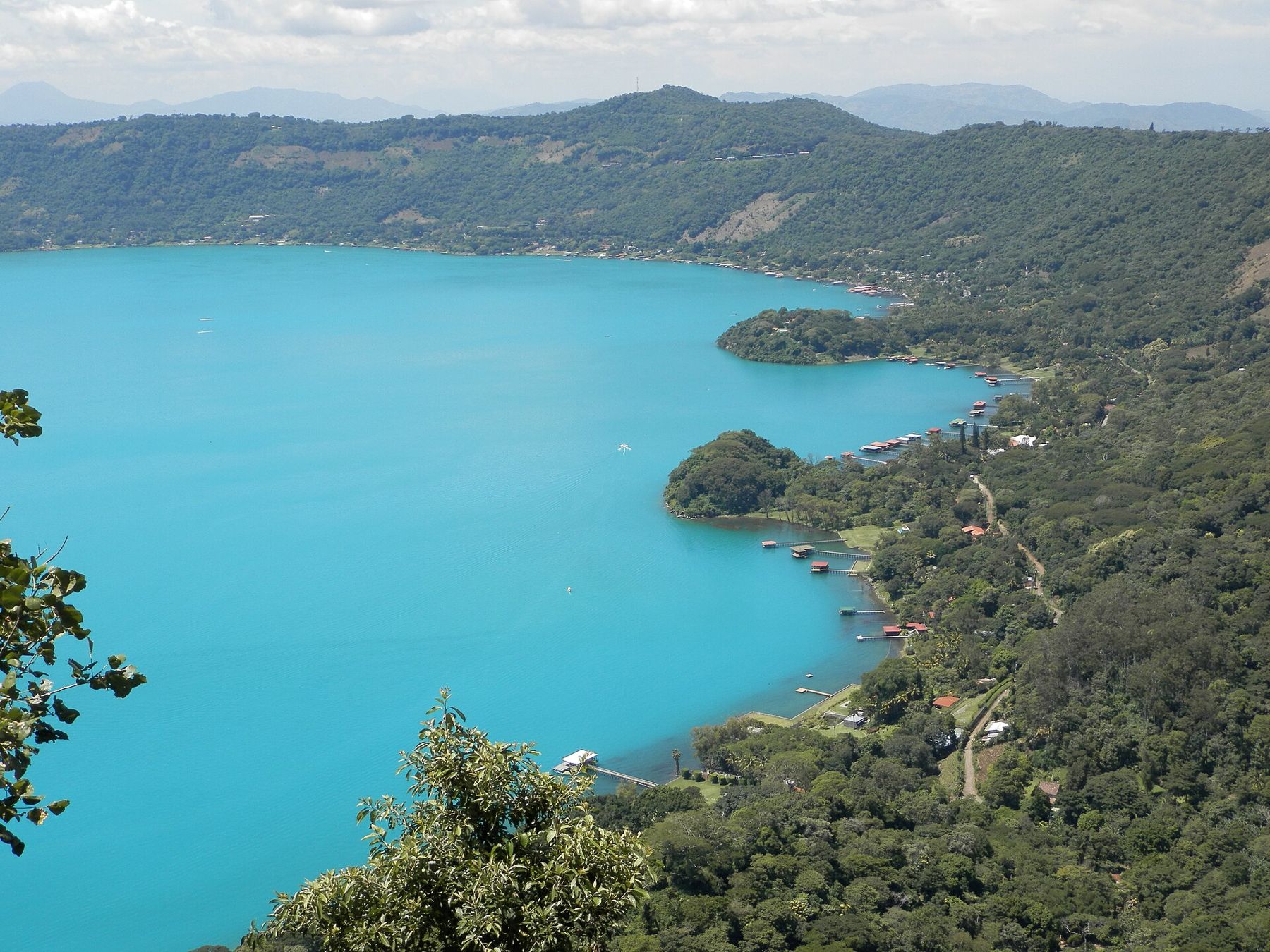
Lake Coatepeque is one of the great sights of western El Salvador. It lies in a caldera, a huge basin left behind when an ancient volcano erupted and collapsed, and its water fills the bottom of a bowl of steep, forested walls. From the rim the lake looks almost perfectly round and impossibly blue; from the shore it is a working lake of docks, boats and weekend houses. Both views are worth having, and a single day lets you have them.
The lake sits just south of Santa Ana, between the city and the volcanoes of the Los Volcanes National Park. It covers roughly 25 square kilometres and is more than 100 metres deep in places. The shore lies at about 750 metres, warm by day but fresher than the coast, and the caldera walls rise several hundred metres above it.
A lake in a caldera
Coatepeque's basin formed through a series of massive eruptions tens of thousands of years ago, which emptied the magma beneath an older volcano and left the ground to collapse into the space. Over time the basin filled with water. Smaller volcanic domes and cones grew inside it afterwards, and the island of Teopán near the southern shore is one of them.
The lake has no surface river flowing out of it, and the water stays in the basin for a long time, which affects its chemistry and its colour. There are hot springs on parts of the shore, a reminder that the volcanic system beneath is not completely cold. The guide to why Coatepeque turns turquoise explains the colour changes in more detail.
The rim road and its viewpoints
The classic first view of the lake comes from the road along the northern rim of the caldera, the route most people take when arriving from Santa Ana or from the highway near El Congo. As the road crests the rim, the whole lake opens below you. There are several places along the road where you can pull over safely and look out, some with simple viewpoints, some just wide shoulders.
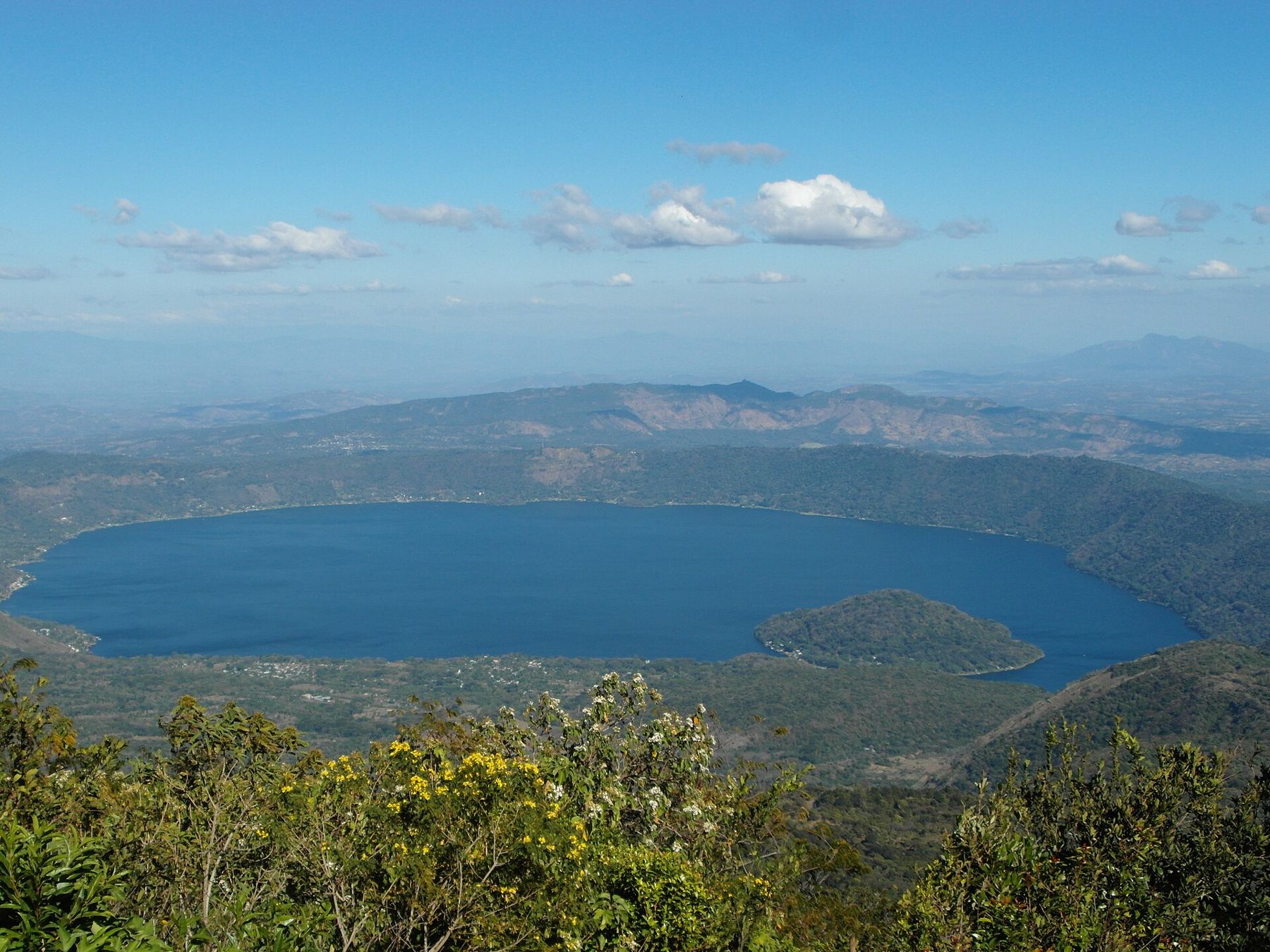
From high above, Teopán appears as a green hump near the far shore, and the line of the caldera wall is easy to trace all the way round. On clear days you can pick out the volcanoes to the west and the hills of the interior to the east. The view is best in the morning, before haze builds and before afternoon clouds in the rainy season.
The views from Cerro Verde, inside the national park, are higher still; see the guide to Cerro Verde's cloud forest for that side of the lake.
Down to the shore
A road winds down from the rim to the lakeshore and runs around part of it. Down here the lake feels different: the water is close, the caldera walls tower overhead, and long wooden docks reach out from the gardens of houses along the shore. Many of the waterfront properties are private, so access to the water is mostly through public spots, restaurants and places that charge a small fee for a day's use of their docks. Arrangements vary, so ask before you settle in.
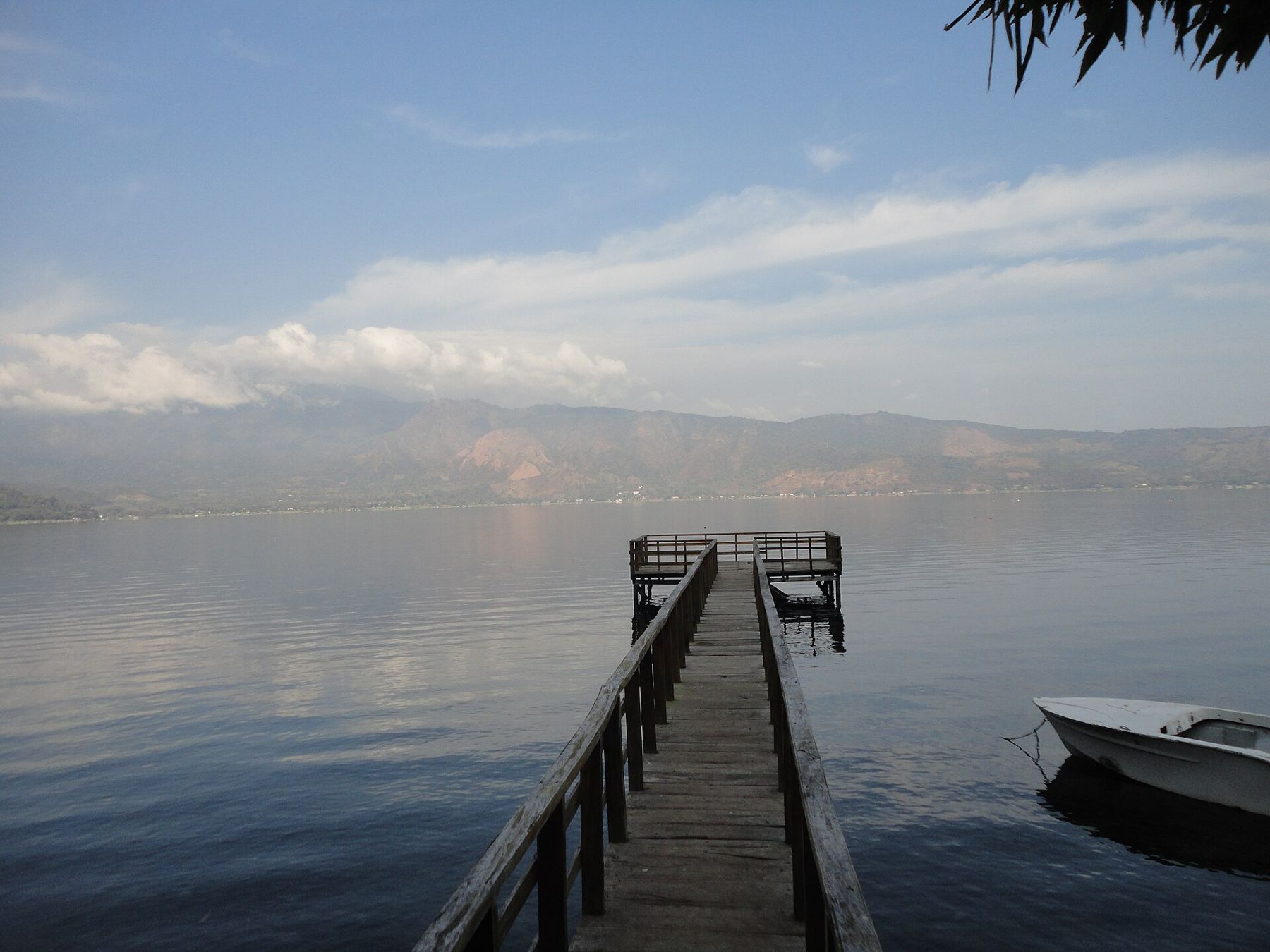
The road along the shore is narrow and winding, shared by cars, buses, pedestrians and the occasional cyclist, so drive slowly. Between the houses there are stretches where the forest comes right down to the water, and where you can stop and look up at the caldera walls rising steeply behind. Small shops and food stalls along the way sell drinks and snacks, and fish from the lake is a common dish in the places that serve meals by the water.
The shore is busiest at weekends and on public holidays, when families come from Santa Ana and San Salvador. On weekdays it is much quieter, and an early morning on a dock, with the water flat and the caldera walls reflected in it, is one of the calmest experiences in the region.
Swimming, boats and Teopán
The lake is popular for swimming, and many visitors jump from docks into the deep, clear water. Take care: it gets deep quickly, there are generally no lifeguards, and the water can be cooler than it looks. Children and weaker swimmers should stay close to the dock or wear a flotation aid.
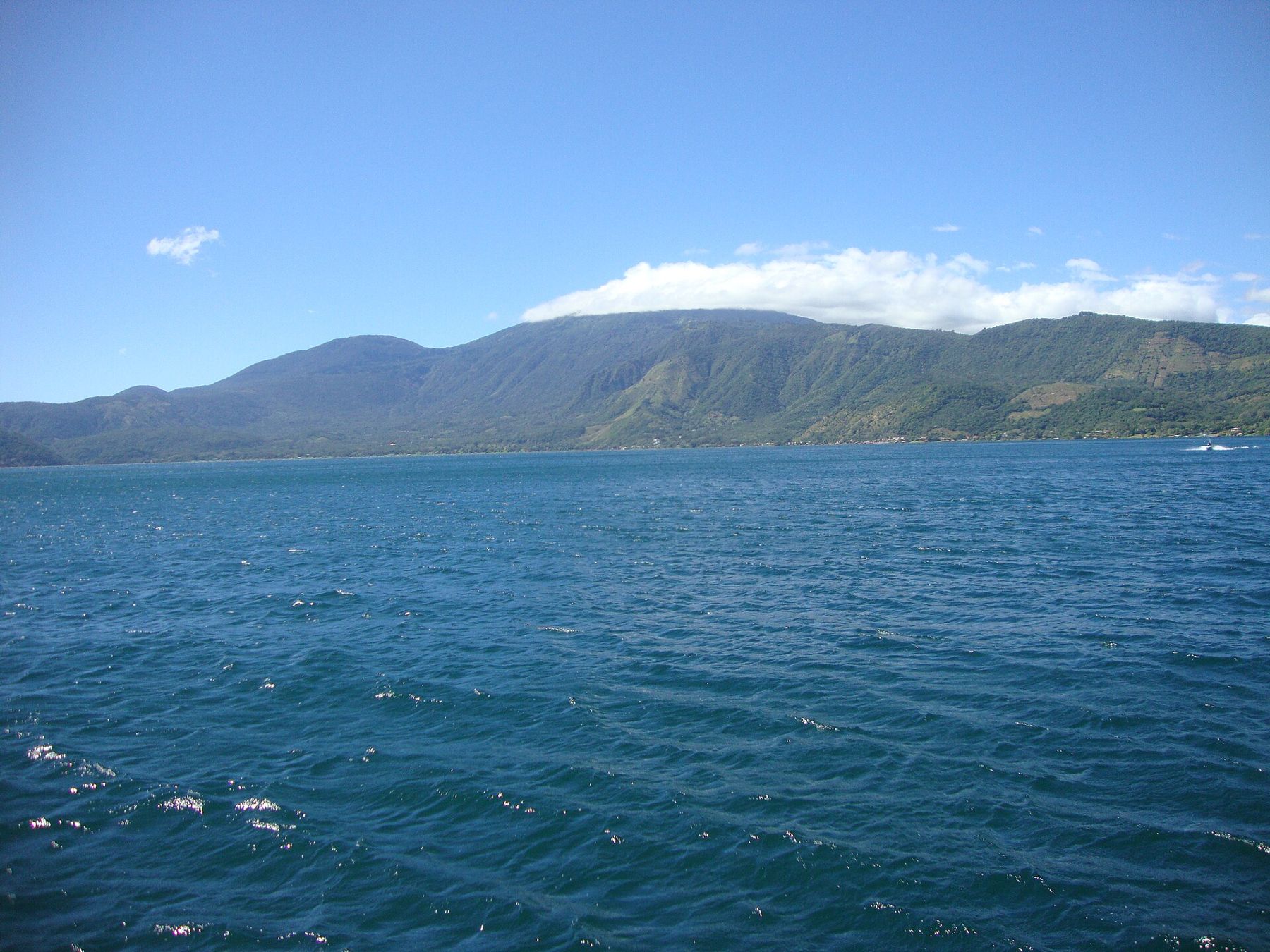
Boat trips around the lake are offered by operators along the shore, and some include a stop near Teopán. The island has a long history as a sacred place, and archaeological remains have been reported there. Kayaking and paddleboarding are also possible from some docks. Prices and options change, so check before you go and agree the details before you set off.
On weekdays it is much quieter, and an early morning on a dock, with the water flat and the caldera walls reflected in it, is one of the calmest experiences in the region.
Teopán is also a reminder that the caldera is still a volcanic landscape. The island and the other domes inside the basin are younger than the collapse that formed it, and the hot springs along the shore show that heat still rises from below. None of this is cause for worry on a normal visit, but it explains why the authorities keep an eye on the whole area, from the lake to the volcanoes beside it.
When the water changes colour
Coatepeque is usually a deep blue, but at times the water takes on a vivid turquoise or milky green. These episodes come and go, sometimes lasting weeks, and they have been linked to changes in the lake's chemistry and to blooms of microscopic organisms in the water. When the colour is at its strongest, the view from the rim is extraordinary. Whether it is safe to swim during these episodes is a question for the local authorities, so check current advice if the water looks unusual.
Getting there and practical notes
From Santa Ana the lake is a short drive, and a car makes it easy to stop at the viewpoints and then drop to the shore. Buses run from Santa Ana and from the highway junction toward the lake, but services and routes change, and some only reach the rim; check before you travel. The page on getting around the west covers the options.
- Bring swimwear, a towel, sunscreen and a hat; the sun is strong on the water.
- Carry small US dollar notes for parking, dock use and food.
- Weekdays are quieter than weekends.
- The dry season, roughly November to April, has the most settled weather.
Conditions in El Salvador have changed a great deal in recent years; check current official advice before you go and follow local guidance about where to swim and walk. With that done, Coatepeque is one of the easiest and most rewarding days out from Santa Ana, a lake that looks as good from the water as it does from the rim.
Coffee note
Coffee grows on the upper slopes of the caldera wall. Driving down from the rim, you pass from farms and shade trees into the warmer air of the shore.