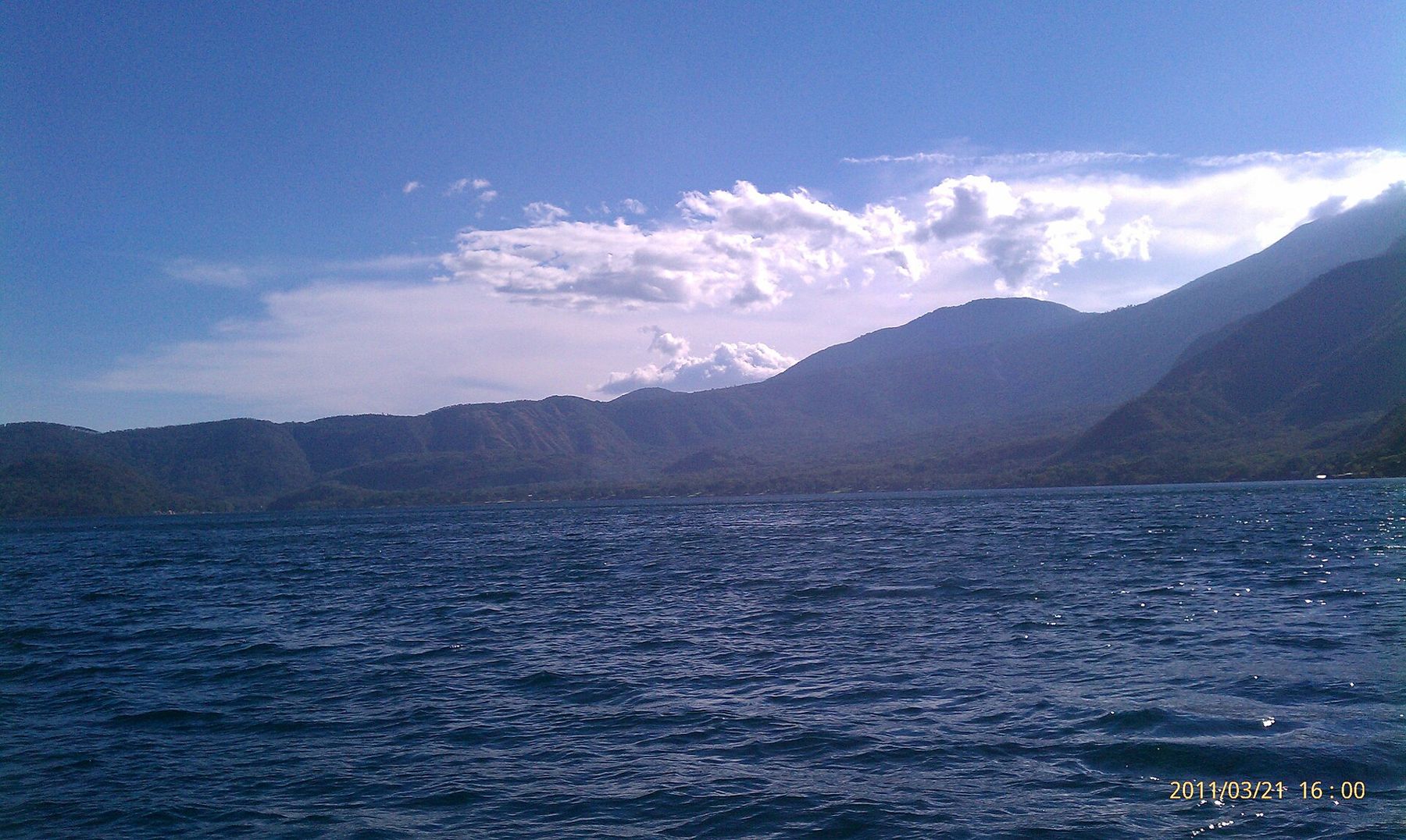
Visitors to Lake Coatepeque often arrive expecting the turquoise water they have seen in photographs and find a lake of deep, ordinary blue. Others arrive on a day when the whole lake has turned a pale, milky green-blue and wonder whether something has gone wrong. Both are normal for Coatepeque. The lake's colour changes, sometimes dramatically, and the reasons lie in how it was formed and what is dissolved and living in its water.
A lake in a collapsed volcano
Coatepeque fills a caldera, a basin left when a large volcano emptied its magma chamber in a series of huge eruptions tens of thousands of years ago and the ground above collapsed. Rain and groundwater filled the hole. Later, smaller volcanic domes grew inside the basin, and one of them forms the island of Teopán near the southern shore.
The lake is deep, more than 100 metres in places, and has no river flowing out of it. Water enters mainly from rain, runoff and springs, and leaves mainly by evaporation and seepage. That means water, and whatever is dissolved in it, stays in the basin for a long time. Over years, minerals and nutrients build up, and small changes in the lake's balance can show up as changes in its colour.
Minerals and sulphur from below
The volcanic system beneath Coatepeque is not entirely asleep. Hot springs bubble up on parts of the shore, and warm, mineral-rich water seeps into the lake from below. This water carries dissolved substances such as sulphur compounds, calcium and other minerals picked up from the volcanic rock.
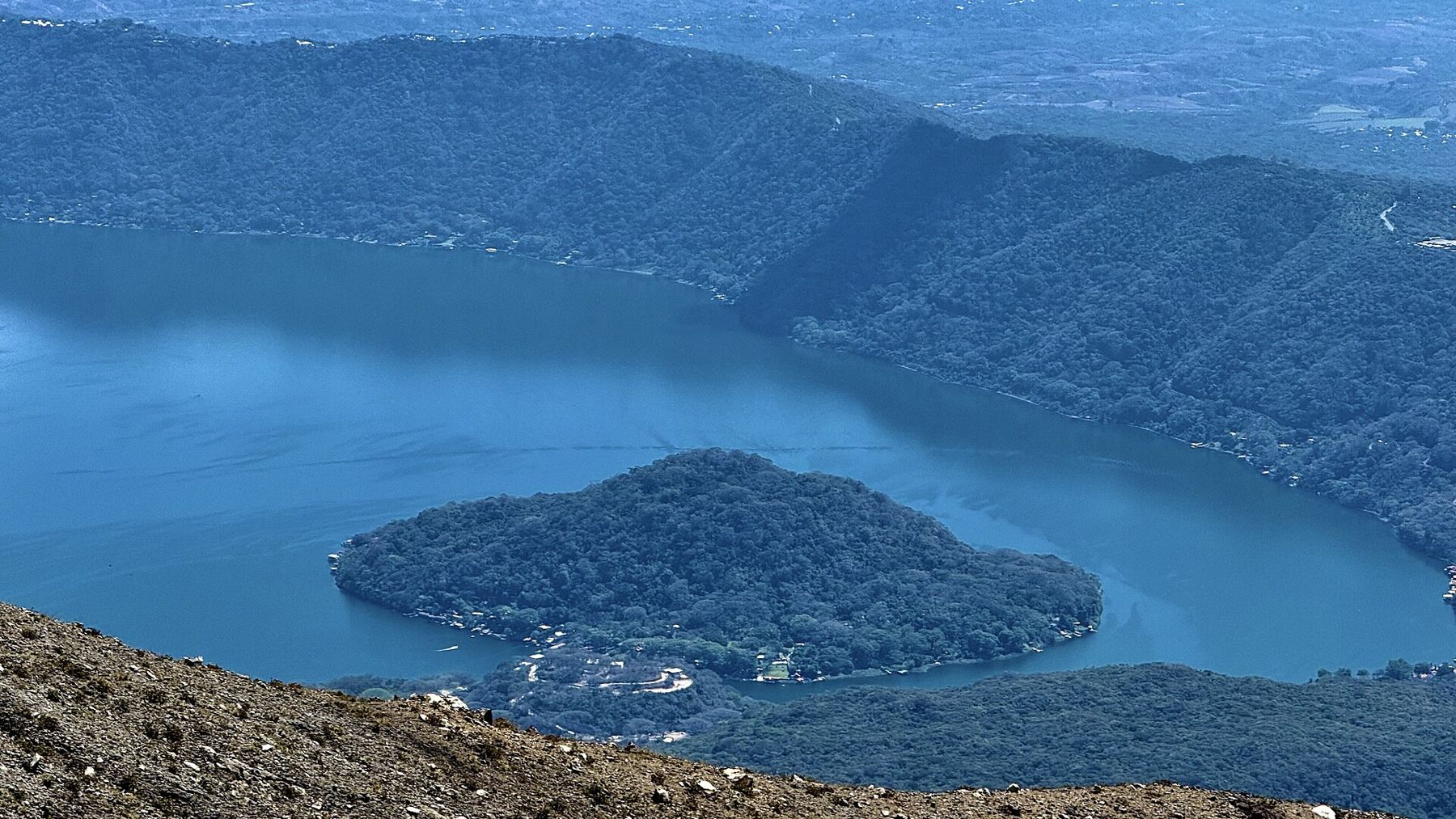
Dissolved minerals can change how water scatters light. Very fine particles suspended in the water reflect blue and green wavelengths back toward the surface, making the lake look paler and more turquoise than pure deep water would. Something similar happens in some glacier lakes and limestone pools, where fine sediment or mineral particles give the water a milky blue.
Blooms in the water
The most striking colour changes at Coatepeque have been linked to blooms of microscopic organisms, including microalgae and cyanobacteria. When conditions are right, with warm water, plenty of sunlight and nutrients in the lake, these organisms multiply quickly, and their sheer numbers change the colour of the water across the whole lake.
Nutrients come from several places: minerals from the volcanic springs, runoff from the farmland on the caldera walls, and waste water from the houses and businesses around the shore. Scientists and the Salvadoran authorities have studied the episodes, and the explanations they give generally combine natural factors with human ones. The episodes usually fade after weeks or months, and the lake returns to its usual blue.
Not all of these blooms are harmless. Some cyanobacteria can produce toxins, and during strong episodes the authorities have at times advised caution about contact with the water. If the lake looks unusual when you visit, check current official advice before swimming.
Seeing the colour change
There is no reliable season for the turquoise episodes. They have been reported in different years at different times, and some years pass without one at all. What is predictable is that the colour looks strongest from above, so if you hear that the lake has turned, go to the rim road viewpoints on the northern side of the caldera, ideally in the morning before haze builds.
Even on a normal blue day, the lake's colour changes with the light. Under a clear sky at midday it can look almost navy; on a hazy afternoon it turns grey-blue; near the shore, where the water is shallower, you see greens and browns from the lake bed. The guide to Lake Coatepeque from the rim and the shore covers the viewpoints and how to reach the water.
The hot springs on the shore
The hot springs that feed minerals into the lake are also one of its curiosities. On parts of the shore, warm water rises through the lake bed or emerges at the waterline, and in a few places you can feel the temperature change as you swim. Some springs are on private land and others are reached through places along the shore; access changes, so ask locally and check before you go.
The springs are a quiet reminder that Coatepeque is part of a living volcanic system. Just to the west stand the Santa Ana volcano, which erupted in 2005, and the young cone of Izalco, which was active until 1966. The heat beneath the region still finds its way to the surface in vents, fumaroles and springs like these.
Looking after the lake
Coatepeque is a much loved lake, and its health depends on how people use it and the land around it. Waste water, erosion from the caldera slopes and building along the shore all add to the nutrients that feed blooms. Local groups and the authorities have worked on these problems, with mixed results over the years.
As a visitor, the most useful things you can do are simple: take your rubbish away with you, use proper toilets, avoid soaps and sunscreens in the water where you can, and respect any advice about swimming. The lake has looked after the people of the west for a long time, and it rewards care.
Planning a visit
The lake is a short drive south of Santa Ana, and buses run in its direction, though routes and timetables change; check before you travel. The dry season, roughly November to April, has the most settled weather and clearest views. Conditions in El Salvador have changed a great deal in recent years; check current official advice before you go. Whether the lake greets you in deep blue or pale turquoise, it is worth the trip, and now you know what you are looking at.
Coffee note
The steep caldera walls carry coffee on their upper slopes. Rain running off farms and villages ends up in the lake, part of the story of its water.